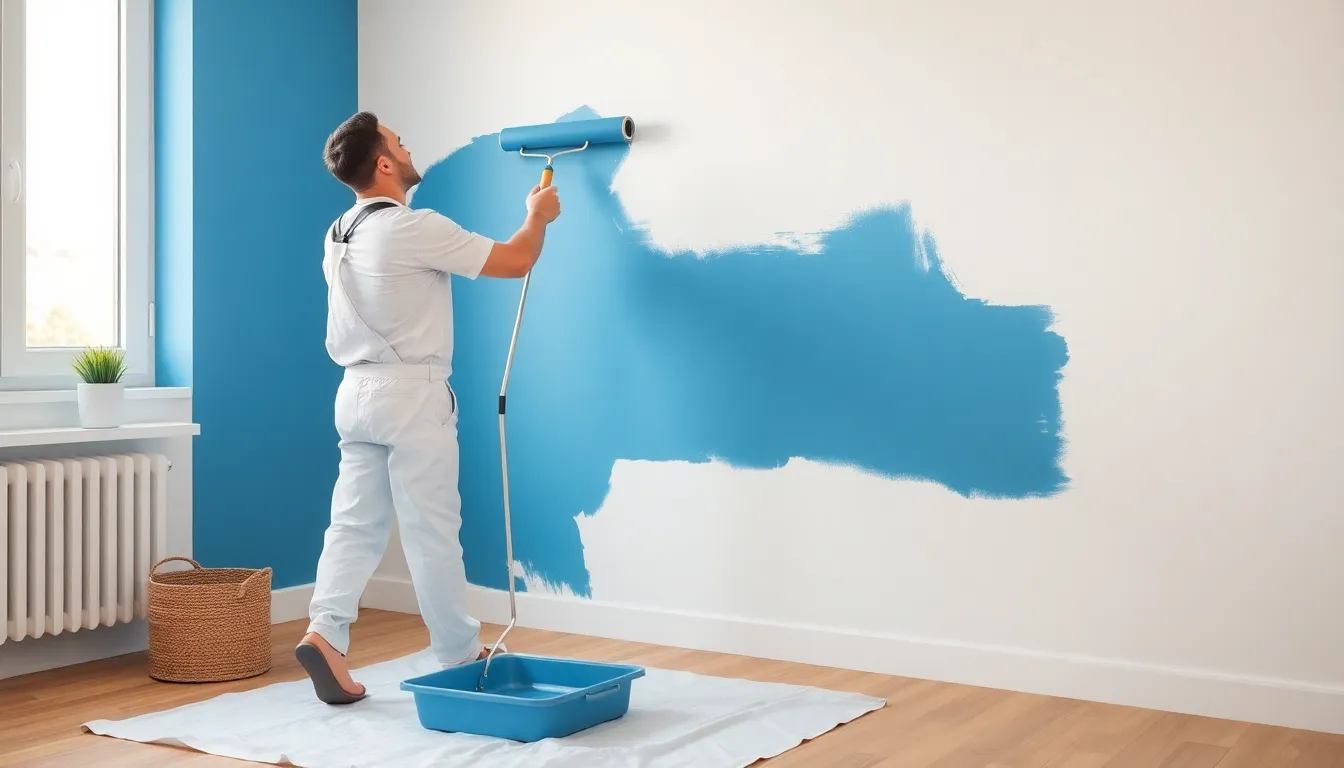
Estimate how much paint you need for any room. Enter your room dimensions, account for doors and windows, and choose how many coats you want. Our calculator factors in standard paint coverage of 350 square feet per gallon to give you an accurate gallon count.
Room Dimensions
Openings
Standard door: ~20 ft² subtracted each
Standard window: ~15 ft² subtracted each
Paint Settings
Industry standard: 350 ft²/gal. Check your paint can for specifics.
Average quality interior paint: $30–$60/gal. Premium brands run higher.
🎨 Paint Estimate
Total Wall Area—
Door & Window Deduction—
Paintable Area—
Coats Applied—
Total Coverage Needed—
Gallons Needed—
Quarts Needed—
Estimated Paint Cost—
Tip: Buy an extra quart for touch-ups. Round up gallons — you can't buy fractional gallons.
How to Use the Paint Calculator
Measure the length, width, and wall height of your room in feet. Enter the number of doors and windows — each standard door subtracts 20 square feet and each window subtracts 15 square feet from the total wall area. This gives you the true paintable surface area.
Most walls need two coats for even coverage, especially when painting over a darker color or fresh drywall. Select your number of coats from the dropdown. The calculator multiplies your paintable area by the number of coats to determine total coverage needed, then divides by the coverage rate (default 350 ft² per gallon) to give you the exact gallon count.
The cost estimate uses your entered price per gallon. For budgeting, expect to spend $30–$60 per gallon for quality interior latex paint. Don't forget primer — if you're painting over bare drywall or a dramatically different color, budget for one coat of primer as well.
Paint Project Tips
Test the color first. Buy a sample pot and paint a 2×2 ft patch on each wall. Colors look different under your room's lighting than on a swatch.
Don't skimp on prep. Clean walls, fill holes, sand rough spots, and tape trim before you open a single can. Prep is 80% of a good paint job.
Buy all your paint at once. Even "identical" colors from different batches can have subtle variations. Mix all gallons of the same color together in a 5-gallon bucket for perfect consistency.
Flat for ceilings, eggshell/satin for walls, semi-gloss for trim. Flat paint hides imperfections; semi-gloss is durable and washable for high-touch areas.
For a standard 12×12 room with 8-foot ceilings, two doors, and two windows, you need approximately 2 gallons for two coats. The walls total about 384 ft², minus 70 ft² for openings gives ~314 ft². Two coats = ~628 ft² of coverage needed, which at 350 ft²/gal requires about 1.8 gallons — so buy 2 gallons.
Most designers recommend painting the ceiling flat white regardless of wall color. White ceilings make rooms feel taller and brighter. If your walls are white, use a slightly different shade for the ceiling to create subtle contrast. Ceiling paint is formulated to be thicker and spatter less — use dedicated ceiling paint, not wall paint.
Primer is essential if: (1) you're painting bare drywall or new plaster, (2) covering a dark color with a light one, (3) painting over stains or odors, or (4) the walls are glossy. If you're simply refreshing the same color or going from one light color to another on a previously painted surface, you can usually skip primer and go straight to two coats of paint.
One gallon of quality interior latex paint covers approximately 350–400 square feet of smooth wall in ideal conditions. Textured walls, porous surfaces (bare drywall), and dark-to-light color changes will reduce coverage. Always check the manufacturer's label on your specific paint — coverage rates are printed on every can.
Yes — 5-gallon buckets typically save 15–25% per gallon compared to single gallons. If you need 4 or more gallons for a project, the 5-gallon bucket is almost always the better deal. You'll also avoid batch-matching issues since all the paint comes from one container. Most paint suppliers sell both single gallons and 5-gallon buckets of the same color.