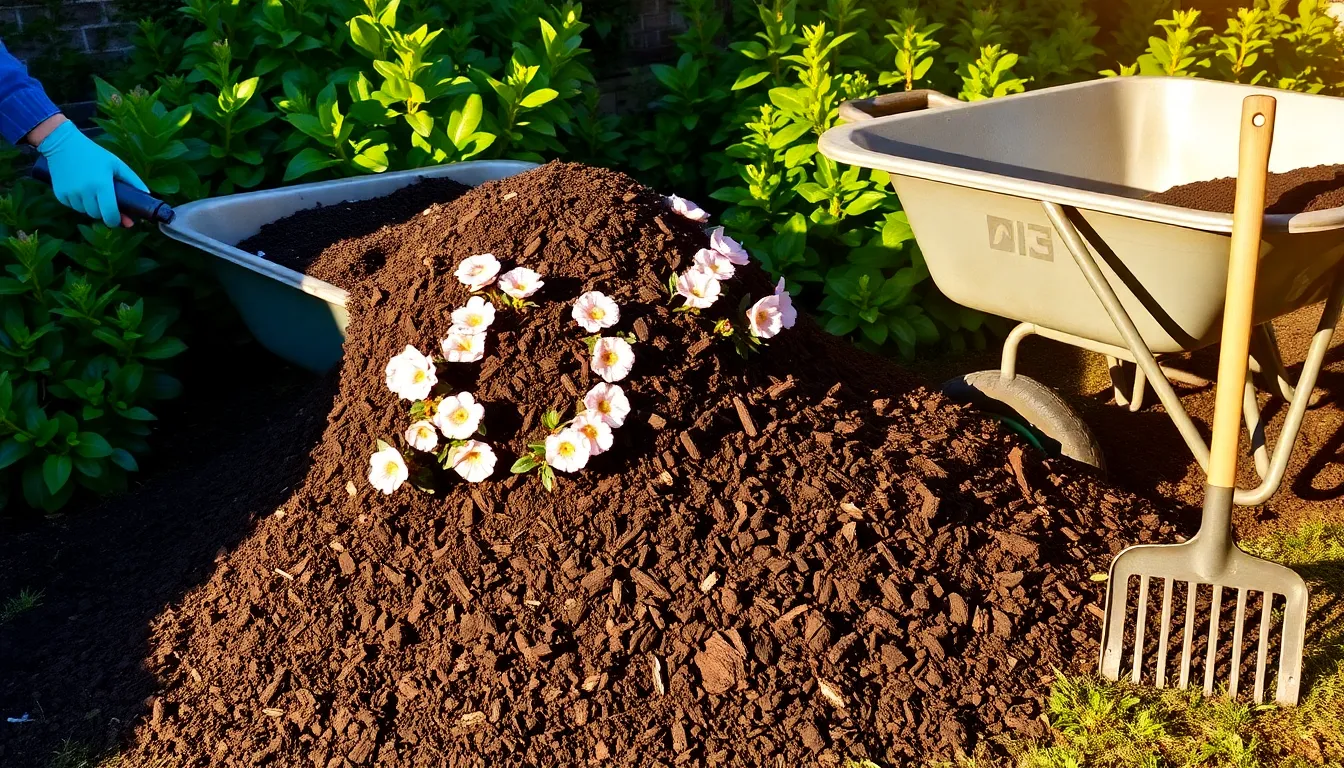
Calculate exactly how much mulch you need for flower beds, tree rings, and landscaping areas. Our mulch calculator estimates cubic yards for bulk delivery and bag counts for DIY pickup — plus a cost breakdown so you can choose the more economical option.
Bed Dimensions
Cost Options
National average: $30–$50/yd³ delivered
Typical: $3–$6 per 2 cu ft bag at hardware stores
🌿 Mulch Estimate
Garden Bed Area—
Mulch Depth—
Volume — Cubic Feet—
Volume — Cubic Yards—
Bags Needed—
Bulk Cost (Delivered)—
Bagged Cost (DIY Pickup)—
You Save With Bulk—
Add 5–10% extra for settling. Bulk delivery often has a minimum order (usually 3–5 yards).
How to Use the Mulch Calculator
Measure your garden bed's length and width in feet. For irregularly shaped beds, break the area into rectangles, calculate each separately, and add the totals. Select your desired mulch depth — 2 inches for a light refresh on an existing bed, 3 inches for standard coverage (the most common choice), or 4 inches for new beds and maximum weed suppression.
The calculator shows both bulk (cubic yard) and bagged estimates. Bulk delivery is almost always cheaper per yard for large projects — a cubic yard costs $30–$50 delivered versus $50–$110 when buying equivalent bags. However, bagged mulch is more convenient for small beds and allows you to work at your own pace without scheduling a delivery.
The "You Save With Bulk" comparison tells you whether ordering in bulk is worthwhile. If your project requires fewer than 15 bags, bagged mulch usually wins on convenience. Over 20 bags, bulk delivery becomes the clear winner on both cost and labor.
Mulching Tips
Don't volcano-mulch your trees. Keep mulch 3–6 inches away from tree trunks and plant stems. Piling mulch against the trunk causes rot, disease, and pest infestation.
Refresh annually. Organic mulches like bark and wood chips decompose over time. Top up with 1–2 inches each spring to maintain the 3-inch ideal depth.
Choose the right mulch type. Bark mulch lasts longest (2–3 years), wood chips are great for paths, and shredded hardwood looks best in flower beds. Rubber mulch lasts decades but doesn't improve soil.
Water before and after mulching. Give your beds a deep watering before laying mulch, then water again after spreading. This locks in moisture and helps the mulch settle.
Apply 2–4 inches of mulch for most garden beds. Two inches is sufficient for a seasonal refresh on existing beds. Three inches is the sweet spot — thick enough to suppress weeds and retain moisture without suffocating plant roots. Four inches is ideal for new beds, high-weed areas, or around trees (keeping mulch pulled back from the trunk). Never exceed 4 inches — too much mulch can prevent water and oxygen from reaching the soil.
One cubic yard equals 27 cubic feet. Using standard 2 cu ft bags, you need 13.5 bags per cubic yard (typically rounded to 14 bags). Large 3 cu ft bags need 9 bags per yard. This is why bulk delivery is so much cheaper — a cubic yard delivered costs about $35 versus 14 bags at $4 each ($56 total). The savings add up fast for big projects.
Almost always yes — bulk mulch typically costs $30–$50 per cubic yard delivered, while the equivalent amount in bags costs $50–$110. The break-even point is usually around 10–15 bags. However, bulk delivery often has a minimum order of 3–5 cubic yards. For small projects under 1 yard, bagged mulch is more practical despite the higher unit cost.
Shredded hardwood bark is the most popular choice for flower beds — it looks attractive, breaks down slowly (2–3 years), and enriches the soil as it decomposes. Pine bark nuggets last longer but can float away in heavy rain. Cedar and cypress mulches repel insects naturally. Avoid dyed mulches if you're growing edibles — the colorants can leach into the soil.
Organic mulch should be topped up annually with 1–2 inches to maintain depth. Complete replacement is only needed every 2–4 years, depending on the mulch type and your climate. In hot, humid regions, mulch decomposes faster. If your mulch has compacted into a mat that repels water, it's time to remove and replace it. Rubber mulch can last 10+ years but doesn't benefit the soil.