Grout Calculator
Calculate the exact pounds of grout needed for any tile project. Enter your tile dimensions, joint width, tile thickness, and total square footage. The calculator handles all common tile sizes — from 1-inch mosaics to 24×48 large-format tiles — and accounts for both sanded and unsanded grout. Includes a coverage chart for quick reference.
Tile & Grout Specifications
🧹 Grout Estimate
Grout Coverage Chart
Quick reference for approximate grout coverage across common tile sizes and joint widths. Values assume 3/8″ tile thickness and 100 sq ft of area. Your actual coverage may vary — use the calculator above for precise results.
| Tile Size | 1/16″ Joint | 1/8″ Joint | 3/16″ Joint | 1/4″ Joint | 3/8″ Joint |
|---|---|---|---|---|---|
| 1″ × 1″ Mosaic | 3.0 lbs | 6.0 lbs | 9.0 lbs | 12.0 lbs | 18.0 lbs |
| 2″ × 2″ | 1.5 lbs | 3.0 lbs | 4.5 lbs | 6.0 lbs | 9.0 lbs |
| 3″ × 6″ Subway | 1.1 lbs | 2.3 lbs | 3.4 lbs | 4.5 lbs | 6.8 lbs |
| 4″ × 4″ | 0.8 lbs | 1.5 lbs | 2.3 lbs | 3.0 lbs | 4.5 lbs |
| 6″ × 6″ | 0.5 lbs | 1.0 lbs | 1.5 lbs | 2.0 lbs | 3.0 lbs |
| 6″ × 24″ Plank | 0.4 lbs | 0.8 lbs | 1.3 lbs | 1.7 lbs | 2.5 lbs |
| 8″ × 8″ | 0.4 lbs | 0.8 lbs | 1.1 lbs | 1.5 lbs | 2.3 lbs |
| 12″ × 12″ | 0.3 lbs | 0.5 lbs | 0.8 lbs | 1.0 lbs | 1.5 lbs |
| 12″ × 24″ | 0.2 lbs | 0.4 lbs | 0.6 lbs | 0.8 lbs | 1.1 lbs |
| 18″ × 18″ | 0.2 lbs | 0.3 lbs | 0.5 lbs | 0.7 lbs | 1.0 lbs |
| 24″ × 24″ | 0.1 lbs | 0.3 lbs | 0.4 lbs | 0.5 lbs | 0.8 lbs |
| 24″ × 48″ | 0.1 lbs | 0.2 lbs | 0.3 lbs | 0.4 lbs | 0.6 lbs |
How to Use the Grout Calculator
Select a common tile size from the dropdown, or choose \"Custom Size\" and enter your exact tile dimensions in inches. Select your grout joint width — 1/8″ is the most common for floor and wall tile, 1/16″ is for rectified (precision-cut) tiles, and 1/4″+ works best for irregular stone or rustic tiles. Choose your tile thickness based on your specific tile — the default 3/8″ covers most standard ceramic and porcelain floor tiles.
Enter the total square footage of the area you're grouting. For floors, multiply length × width. For walls, measure each wall section and add them up. The calculator uses the industry-standard grout formula: grout (lbs) = (tile_width + tile_length) ÷ (tile_width × tile_length) × joint_width × tile_thickness × area_sqft × 0.002. This accounts for all the grout lines in both directions of your tile layout.
The results tell you the total pounds of grout needed, the grout type (sanded for joints 1/8″ and wider; unsanded for narrower joints), the number of 10 lb bags to purchase, the total cost, and the approximate coverage per bag for your specific tile configuration. Always buy at least one extra bag — running out mid-project means a visible color seam.
Grout Application Tips
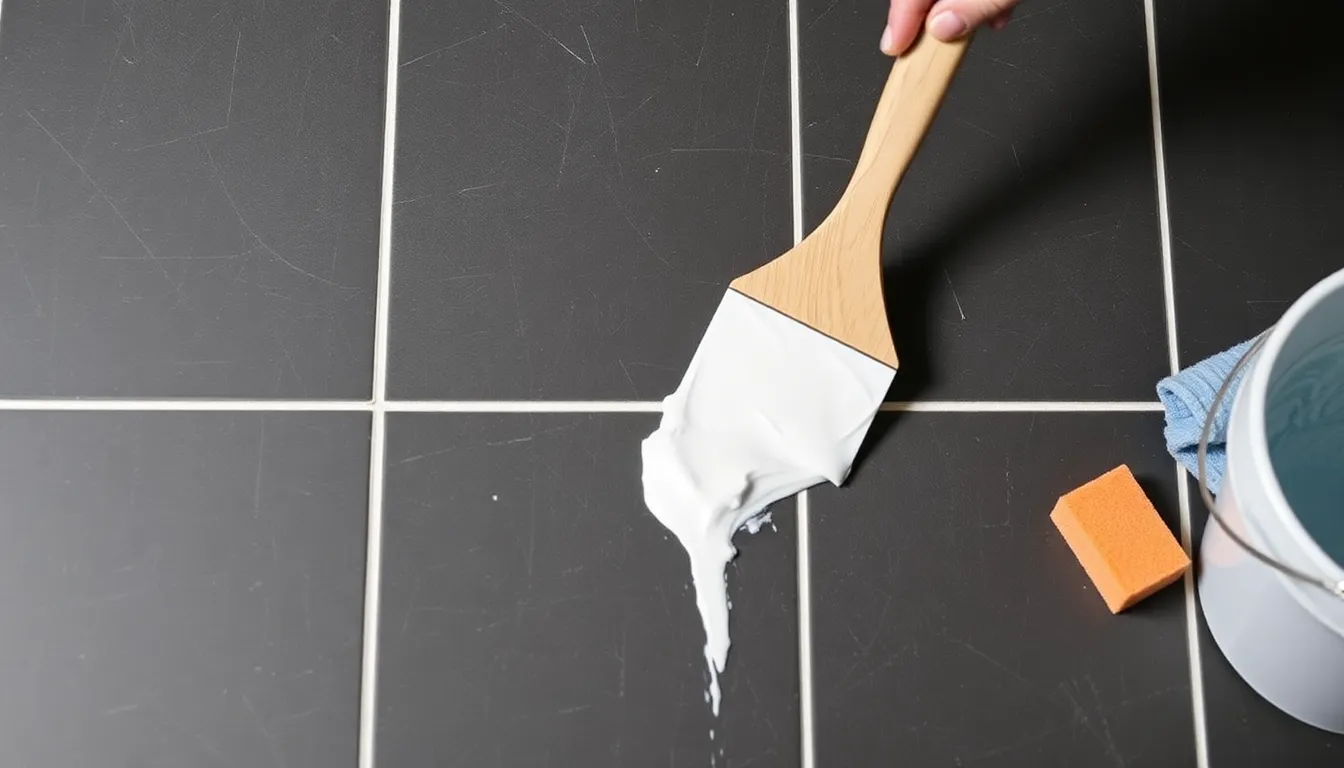
- Mix grout to the right consistency. It should be like peanut butter — stiff enough to hold its shape but spreadable. Too wet and it shrinks and cracks; too dry and it won't fully fill the joints.
- Work in small sections. Grout skins over in 15–20 minutes. Mix only what you can apply in that time (about 5 lbs for a beginner, more for experienced tilers).
- Clean diagonally. When washing excess grout from tile faces, use a damp sponge in diagonal strokes across the joints — not parallel — so you don't drag grout out of fresh joints.
- Wait for full cure before sealing. Cement-based grout needs 72 hours to cure. Latex-modified grout can be sealed after 24–48 hours. Check the manufacturer's instructions — sealing too early traps moisture and causes efflorescence.
- Use epoxy grout for wet areas. For shower floors, steam rooms, and commercial kitchens, epoxy grout is completely waterproof, stain-proof, and never needs sealing. It's harder to work with and costs more, but it's the only choice for truly wet environments.